


IT in Georgia: An Economic and Statistical Analysis

Georgia’s IT Sector: What Is Behind the Record Growth?
October 1, 2026
In recent years, Georgia’s IT industry has evolved from a relatively small domestic market into an export-oriented sector of the economy. International companies, growing demand for IT services beyond the country’s borders, and the development of a professional community are strengthening Georgia’s position in the global technology services market.
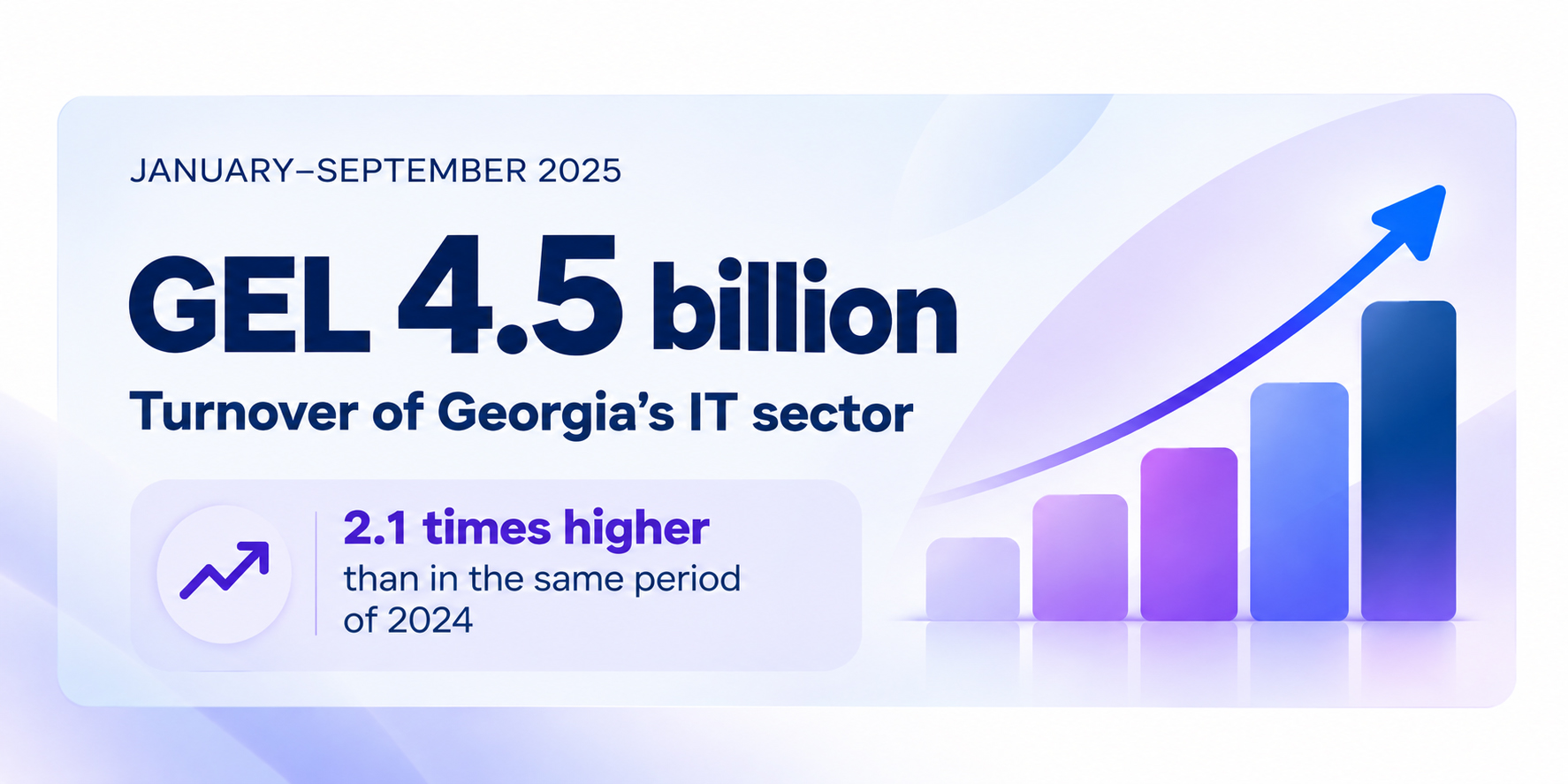
The scale of this transformation is reflected in the economic indicators. During the first nine months of 2025, turnover in Georgia’s IT sector reached GEL 4.5 billion — 2.1 times higher than in the same period of the previous year.
Source: Galt & Taggart, “IT Sector in Georgia,” December 2025.
At the same time, companies operating under special tax regimes are becoming increasingly significant. These include Virtual Zone Persons (VZPs) and companies holding International Company status. Both regimes form part of Georgia’s business environment, but they differ in their eligibility requirements and tax treatment.
However, the rapid growth of the industry brings more than new opportunities. Maintaining competitiveness requires a predictable business environment, qualified professionals, and constructive dialogue between IT companies and the government.
Georgia’s IT Sector and Economic Growth
According to the preliminary estimate of the National Statistics Office of Georgia (Geostat), the country’s real GDP grew by 6.3% in August 2026 compared with August of the previous year. Average economic growth for January–August was 7.6%. Information and communication was among the sectors making a significant contribution to economic growth in August.
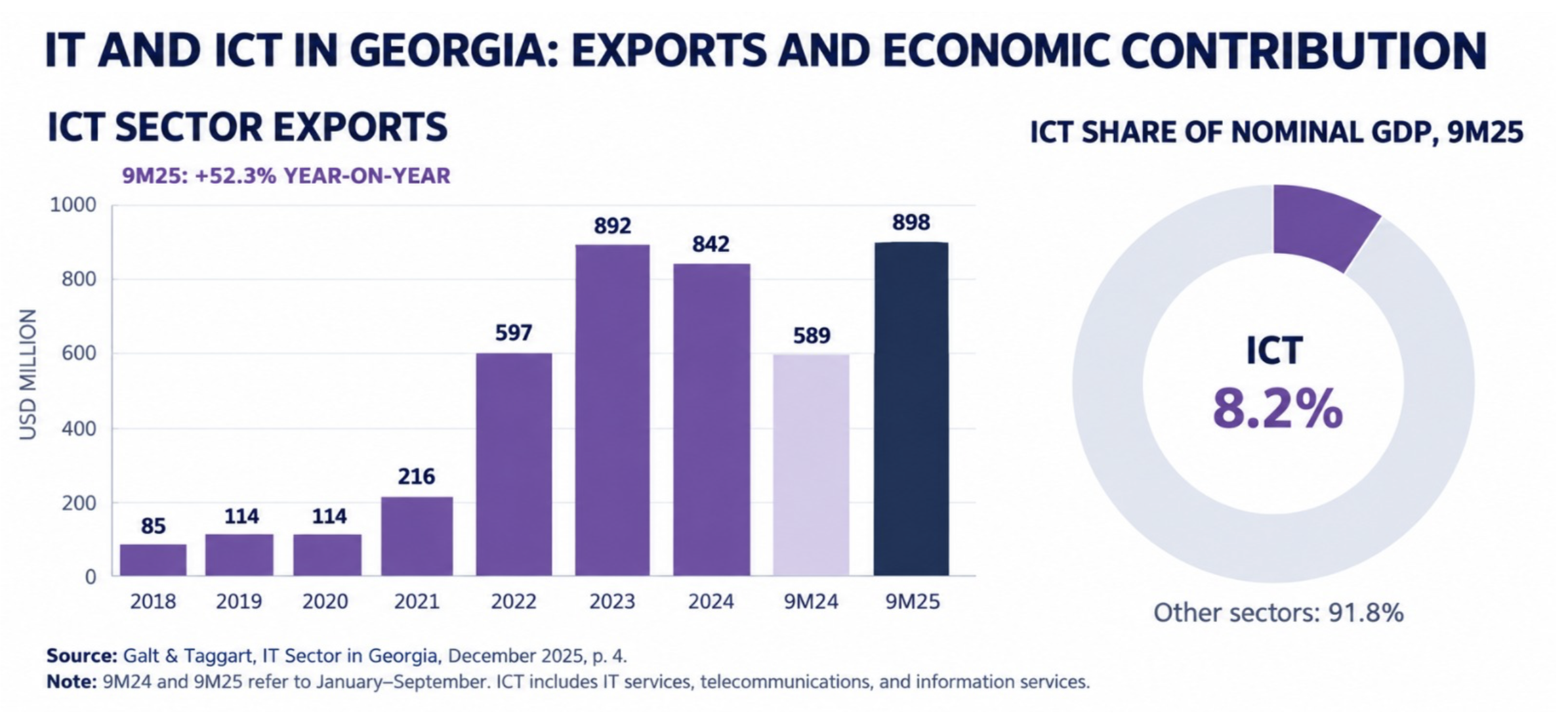
Further insight into the technology sector’s performance is provided by a study published by Galt & Taggart in December 2025. According to the study, during January–September 2025, the information and communication technology (ICT) sector ranked fourth among Georgia’s economic sectors by its share of nominal GDP, accounting for 8.2%. The sector’s real growth over the same period reached 31.6% year-on-year.
When interpreting these figures, it is important to distinguish between IT and ICT. The ICT sector is broader than the IT industry: in addition to IT services, it includes telecommunications and information services. Therefore, the 8.2% GDP share and 31.6% growth rate refer to the entire ICT sector, not exclusively to IT companies.
Nevertheless, data on IT sector turnover and IT services exports show that technology businesses are playing an increasingly prominent role in Georgia’s economy. Assessing the industry’s future prospects requires looking beyond growth rates to include export performance, the operating conditions of international companies, and the stability of the business environment.
IT Company Turnover and Services Exports
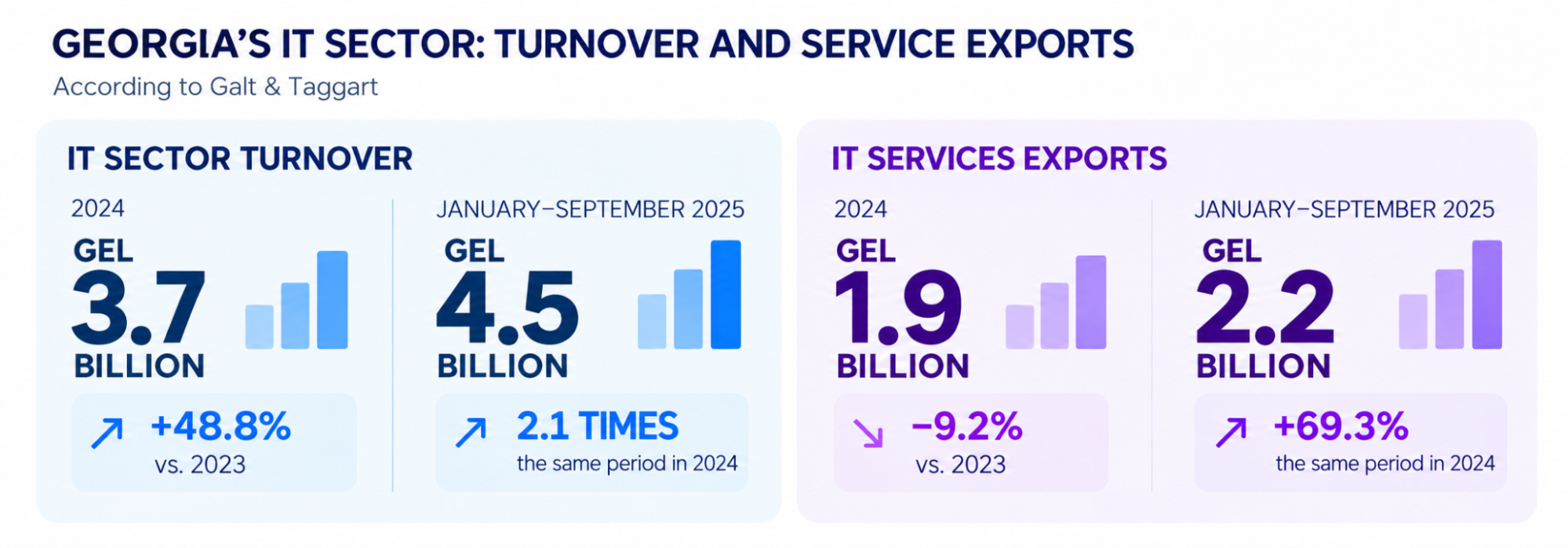
According to Galt & Taggart’s research, Georgia’s IT sector turnover grew by 48.8% in 2024, reaching GEL 3.7 billion. During January–September 2025, turnover amounted to GEL 4.5 billion — 2.1 times higher than in the same period of the previous year.
IT services exports also increased substantially. In the first nine months of 2025, exports reached GEL 2.2 billion, representing year-on-year growth of 69.3%.
Source: Galt & Taggart, “IT Sector in Georgia,” December 2025. Read the full report.
However, export growth has not been consistent. In 2024, IT services exports declined by 9.2% to GEL 1.9 billion. Galt & Taggart’s study attributes this decrease to lower revenue generated by several major international service providers. At the same time, increased turnover among smaller international and domestic companies enabled the sector as a whole to maintain positive momentum.
These results underscore the importance of IT companies’ export potential for the industry’s continued development.
Why Is the IT Business Growing in Georgia?
Special tax regimes have been among the factors supporting the development of Georgia’s IT industry. These include Virtual Zone Person status and International Company status. The introduction of the International Company regime in 2020 expanded the range of options available to IT businesses operating in Georgia.
However, the industry’s long-term potential depends on more than tax conditions. Human capital, the quality of education, and professionals’ ability to adapt to changing demand are equally important.
According to Galt & Taggart’s research, more than 12,000 students studied computer programming at 21 universities in Georgia during the 2024/2025 academic year. The number of developers from Georgia on GitHub increased by 22% in 2024, reaching 138,300. This figure reflects the size of the developer community on the platform; it does not mean that all these developers work for Georgian companies or directly in the local market.
Meanwhile, artificial intelligence is changing the requirements for IT professionals. Advanced technical knowledge, specialized expertise, and competencies in emerging technologies are becoming increasingly important.
Consequently, the future development of Georgia’s IT industry will depend not only on the number of professionals available, but also on the quality of their training, opportunities for upskilling, and companies’ ability to deliver higher-value services.
Virtual Zone Person and International Company: Two Regimes for IT Businesses
Georgian legislation provides for two special regimes that many IT companies consider when choosing their operating model in the country: Virtual Zone Person (VZP) status and International Company status.
Virtual Zone Person status is intended for companies engaged in information technology activities specified by law. Its features relate to the tax treatment of eligible IT services and the flexibility to operate under a business model that may include serving international clients.
International Company status provides separate tax advantages, including preferential profit tax treatment upon distribution of profits and preferential personal income tax rates for eligible employees. To qualify, a company must meet the established requirements regarding its activities and other eligibility criteria.
The two regimes differ in their eligibility conditions, tax structures, and requirements for companies. They cannot be applied simultaneously. The appropriate choice therefore depends on the actual business model, team structure, nature of operations, and compliance with applicable legal requirements.
How Do the Two Regimes Contribute to the Economy?
Tax revenue data provides insight into the economic significance of companies operating under each regime.
According to data from the Revenue Service of Georgia, published in the Association’s analysis, total tax revenue generated by Virtual Zone companies from 2022 through 2025 amounted to GEL 356.7 million. During the same period, tax revenue from companies holding International Company status totalled GEL 219.6 million.
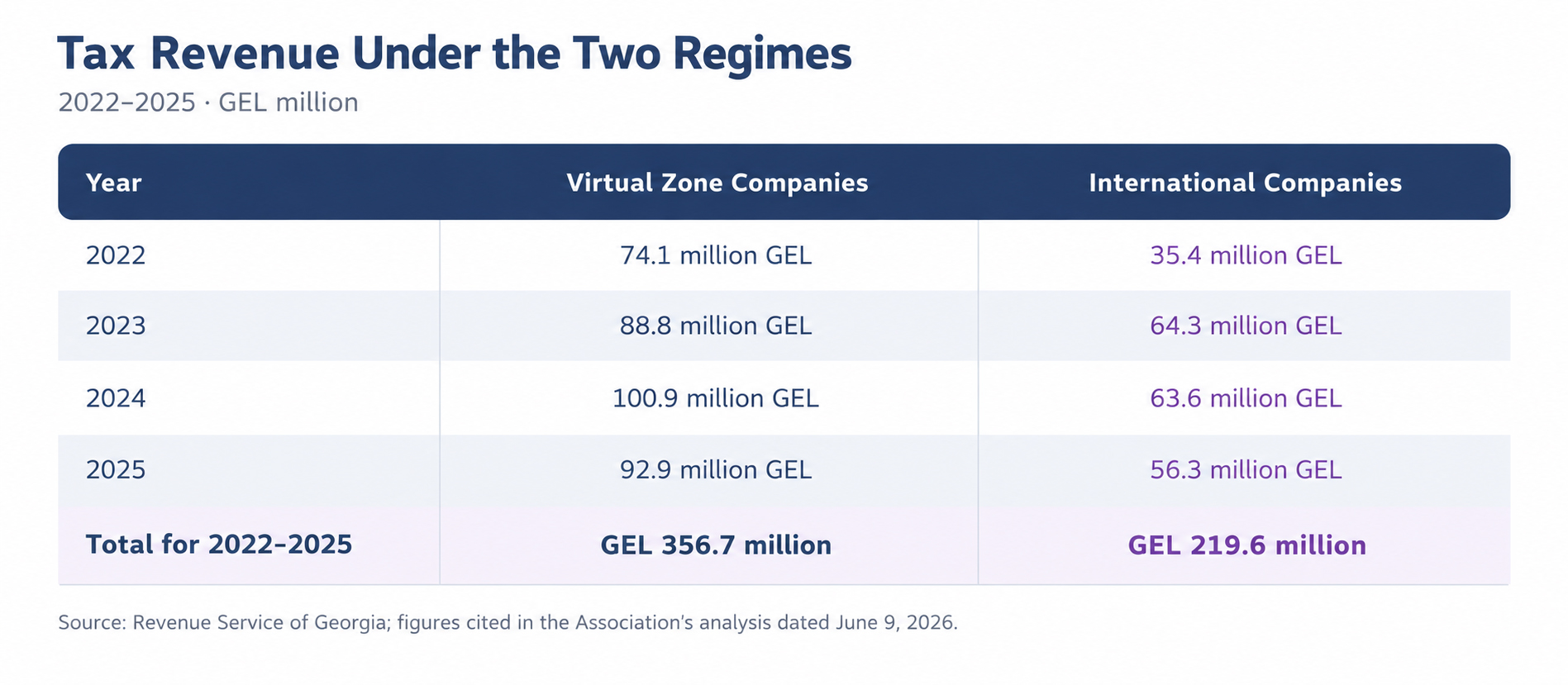
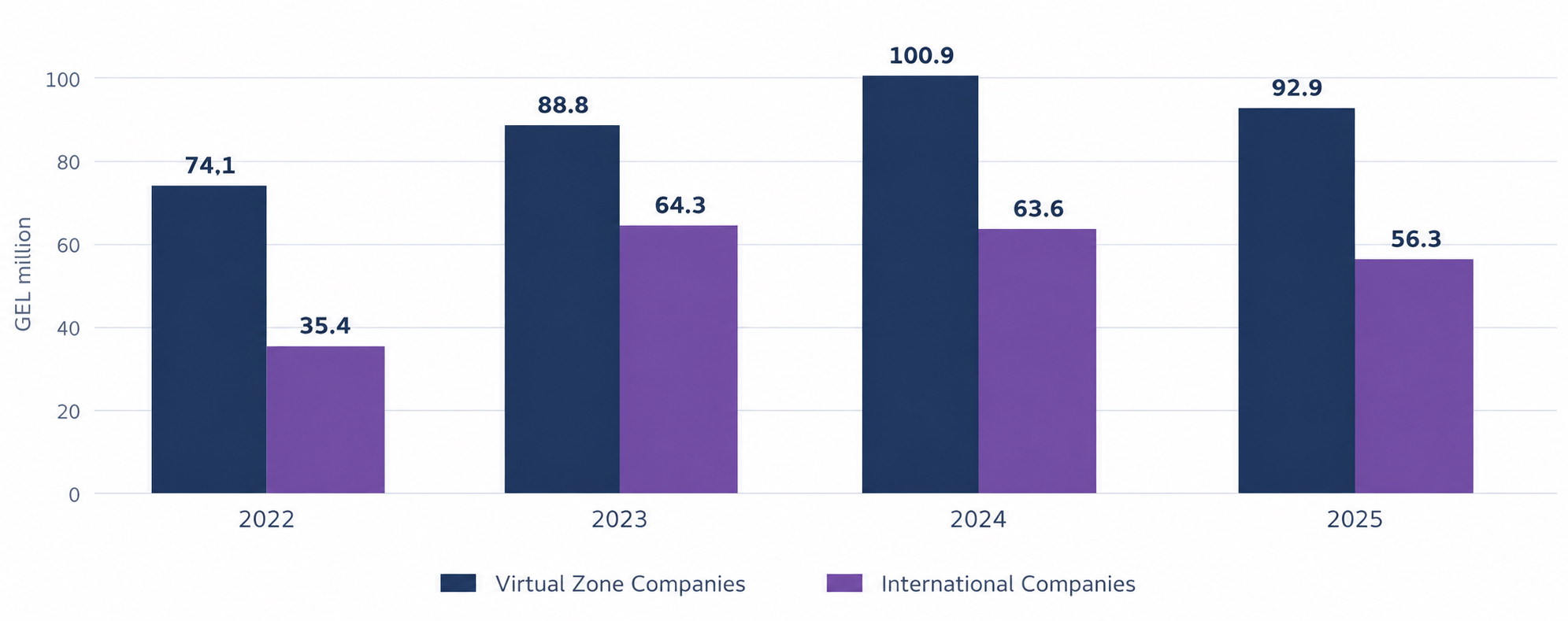
Source: Revenue Service of Georgia data cited in the Association’s article dated June 9, 2026.
Note: The calculation includes taxpayers who held the relevant status for at least one day during the year.
These figures demonstrate the substantial contribution both groups of companies make to the state budget. However, cumulative tax revenue from Virtual Zone companies was higher over the period under review.
It is important to understand that tax revenue is not equivalent to company turnover or profit, and it does not, on its own, establish which regime is more advantageous for a particular business. It represents one aspect of economic contribution and should be considered alongside the eligibility conditions and operational characteristics of each regime.
A more detailed comparison of tax conditions, payment structures, and operational requirements is available in a separate Association article: “Virtual Zone Person or International Company: Which Is More Advantageous for IT Businesses in Georgia?”
The Contribution of Virtual Zone Companies to Georgia’s Economy
According to the Association, as of March 1, 2026, a total of 1,356 companies had obtained Virtual Zone Person status. This figure reflects the scale of the community of IT companies operating under this regime.
The continued development of this community depends not only on attracting new residents, but also on ensuring that existing companies have the conditions necessary to operate sustainably. Issues related to these conditions and business–government relations are addressed in the following section.
Predictable Conditions: The Foundation for Continued Growth
The rapid expansion of Georgia’s IT sector is creating new opportunities for the national economy. However, sustaining this momentum requires continued attention to the business environment in which companies operate.
For international IT businesses, clear legislative requirements, consistent application of the rules, access to qualified professionals, and infrastructure development are essential. As global markets evolve, companies must also adapt to new technological requirements and intensifying competition.
For Virtual Zone companies in particular, it is important to understand the applicable regulations and have timely access to clarification on issues arising in the course of their operations. This helps businesses plan their activities and reduce uncertainty when making commercial decisions.
How the Association Supports Virtual Zone Companies
The Association of Georgian Virtual Zone Persons represents the interests of industry participants and promotes professional dialogue between businesses and government authorities.
One of the Association’s key responsibilities is to gather feedback from companies, identify recurring issues related to legislation and administrative procedures, and develop evidence-based positions for discussion with the competent authorities in Georgia.
Bringing market participants together helps distinguish between issues affecting individual companies and those creating challenges for multiple businesses. This provides a foundation for substantive discussions about potential clarifications or regulatory changes. Decisions on specific measures, however, remain within the remit of the relevant government authorities.
For Virtual Zone companies, membership in the Association provides an opportunity to exchange practical experience, stay informed about current industry issues, and participate in professional dialogue about Georgia’s business environment.
Georgia’s IT Sector: The Next Stage of Development
The IT industry has become an important driver of Georgia’s economic development. Its continued growth will depend on companies’ ability to compete in international markets, attract qualified professionals, and adapt to technological change, as well as on the predictability of the business environment.
The Association of Georgian Virtual Zone Persons brings industry participants together and helps bring shared business concerns into professional discussion.
Operating as a Virtual Zone Person, or considering Georgia as a destination for your IT business? Learn more about the Association and membership opportunities at viz.ge.